


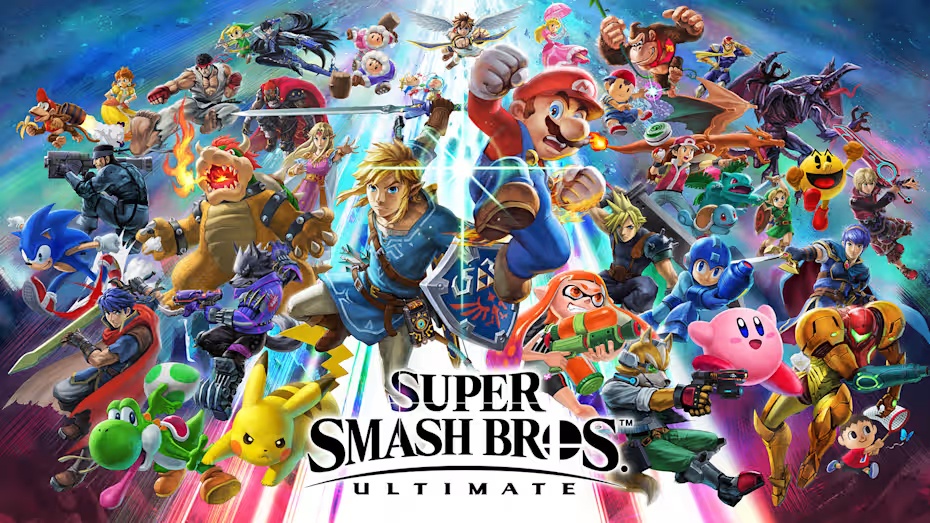
Super Smash Bros. Ultimate has not received a conventional balance shake-up in years, but that has done little to stop its competitive meta from changing. Players continue to discover new setups, optimize movement and frame data, refine matchup knowledge, and develop counterplay against the game’s strongest fighters.

This Super Smash Bros. Ultimate tier list focuses on competitive 1v1 play, ranking fighters by tournament viability, matchup quality, consistency, and how effectively their tools translate into real matches.
How the Smash Ultimate Tier List Works
- S+ Tier: The current elite. These characters can impose their game plan on a large portion of the roster and consistently appear at the highest levels of competitive play.
- S Tier: Exceptional tournament characters with powerful neutral, advantage states, kill options, or matchup coverage.
- A+ Tier: Extremely strong fighters that can challenge the top of the roster and are capable of supporting deep tournament runs.
- A Tier: Reliable high-tier choices with strong tools and clear paths to victory.
- B Tier: Viable characters that can perform well with dedicated specialists but have more exploitable weaknesses.
Tier placement is not a statement that a character cannot win tournaments. Smash Ultimate has an enormous roster, and player skill can overcome matchup disadvantages.
Complete Super Smash Bros. Ultimate Tier List
S+ Tier – The Meta Leaders
| TIER | FIGHTERS |
| S+ | Steve, Sonic, Snake |
These three characters currently sit at the top of the competitive conversation. Steve can reshape the stage and convert small openings into enormous damage, Sonic controls neutral through speed and patience, and Snake turns stage control into a constant threat with explosives and traps.

S Tier – Elite Tournament Picks
| TIER | FIGHTERS |
| S | Mr. Game & Watch, R.O.B., Pyra/Mythra, Kazuya, Diddy Kong, Min Min, Fox, Peach, Daisy, Joker, Yoshi, Pikachu |
These characters have few genuinely poor qualities. Their strengths range from explosive advantage states and oppressive projectile games to elite combo potential and highly reliable kill confirms. Several of them also benefit from highly developed competitive player bases, which means their strongest matchups are continually being explored and optimized.

A+ Tier – High-End Tournament Threats
| TIER | FIGHTERS |
| A+ | Roy, Olimar, Cloud, Luigi, Bayonetta, Samus, Dark Samus, Palutena, Mario |
A+ characters are more than capable of winning major sets. They generally have strong neutral tools, reliable damage output, or advantageous matchup spreads, but they tend to have more visible limitations than the S-tier group.
A Tier – Strong Meta Picks
| TIER | FIGHTERS |
| A | Corrin, Wario, Sora, Falco, Wolf, Hero |
These fighters are highly competitive and can serve as strong mains for tournament players. Their biggest advantages often come from matchup knowledge and specialist-level optimization rather than having a universally oppressive game plan.

B Tier – Viable Mid-High Picks
| TIER | FIGHTERS |
| B | Young Link, Pit, Dark Pit, Captain Falcon, Ken, Rosalina & Luma |
These characters can still deliver excellent results, especially when played by specialists who understand their neutral and matchup requirements. They generally struggle not because they lack strong attacks, but because the top tiers have more reliable ways to force their preferred game plan.

Why Steve Remains at the Top
Steve’s strength comes from the fact that he can fundamentally change the way neutral is played. Blocks create new platforms and walls, Minecart gives him a powerful burst movement option, and his resource system rewards him for finding opportunities to mine. Once Steve has the materials he needs, his combo routes can convert relatively small openings into enormous damage.
His disadvantage is more obvious when resources are limited or when an opponent can prevent him from establishing his preferred setups. For competitive players, however, his combination of stage control, damage output, defensive options, and creative combo routes gives him an unusually high ceiling.

Sonic’s Neutral Game
Sonic’s greatest weapon is not a single attack. It is his ability to dictate when interactions happen. His speed allows him to disengage from unfavorable situations, punish overextension, and repeatedly force opponents to react to his movement. Spin Dash and Spin Charge provide multiple approach and bait options, while his recovery makes edge-guarding him difficult.
The tradeoff is that Sonic often needs to win through repeated neutral interactions rather than simply landing one giant attack. Players facing him must remain patient without giving him control of the match’s pace.
Snake’s Stage Control
Snake can make large portions of the stage dangerous. Grenades, C4, Nikita, and other explosives let him control approaches and punish predictable movement. He is also heavy enough to survive longer than many comparable characters, while his close-range options give him excellent ways to punish opponents who manage to get through his zoning.
His large hurtbox can make him vulnerable to strong combo characters, but Snake’s ability to force awkward approaches remains one of his defining competitive strengths.
How the Meta Has Evolved Without Balance Patches
A frozen balance environment does not mean a frozen meta. Tournament players continue finding new applications for existing mechanics, improving movement, optimizing combos, and learning previously underexplored matchups. Character rankings can change even when the developers make no direct adjustments.
This is especially visible in this game, where player innovation has repeatedly extended the competitive lifespan of individual characters. The result is a meta driven heavily by optimization rather than balance patches.

How to Choose a Main
Tier placement should be one consideration, not the entire decision. Start by choosing a character whose basic game plan makes sense to you. Then ask whether you enjoy:
- Rushdown: Characters such as Fox, Roy, Mythra, and Captain Falcon reward constant pressure.
- Zoning: Snake, Samus, Young Link, and Mega Man excel at controlling space.
- Heavy punish: Kazuya, Luigi, Steve, and other combo-oriented characters can turn a single opening into huge damage.
- Defense and whiff punishment: Sonic, Wolf, and Palutena can win by forcing opponents to overextend.
- Technical play: Characters such as Shulk, Peach/Daisy, Pac-Man, and Ice Climbers offer enormous depth for players willing to invest the time.
A character you enjoy learning will usually give you more long-term value than a top-tier pick you dislike playing.
Matchup Knowledge Matters More Than the Tier Gap
A common mistake is assuming that a five-tier difference means the outcome is predetermined. It does not: Some characters have specific tools that directly challenge supposedly stronger fighters. A zoner may struggle against a fast reflector or rushdown character, while a heavyweight may become much harder to defeat when paired with platforms or a player who understands neutral extremely well.
Learn what your opponent wants to do, identify the interactions they need to win, and force them into situations where those options become less effective.
Tournament Play vs. Online Play
Competitive viability can also feel different between offline tournaments and online matches. Offline play offers more precise reactions and generally more consistent inputs, which can favor technically demanding characters and punish players for predictable habits.
Online latency can alter the value of certain moves, defensive reactions, and punish windows. As a result, characters that rely heavily on quick reactions or precise defensive timing can feel noticeably different outside offline competition. For players focused on online play, personal comfort with the game’s connection environment should be considered alongside the conventional tier ranking.

The current Super Smash Bros. Ultimate meta remains centered on a small group of exceptionally powerful fighters, with Steve, Sonic, and Snake occupying the highest competitive tier. The absence of new balance patches has not stopped the game from developing. Instead, the competitive scene continues to evolve through matchup discoveries, optimized techniques, and increasingly refined character-specific strategies.
For players choosing a main, the tier list is best used as a starting point. Pick a character whose tools fit the way you enjoy playing, learn its difficult matchups, and develop a reliable game plan around neutral, advantage, disadvantage, and ledge situations. Understanding your character can matter every bit as much as where that character appears on a tier list.