



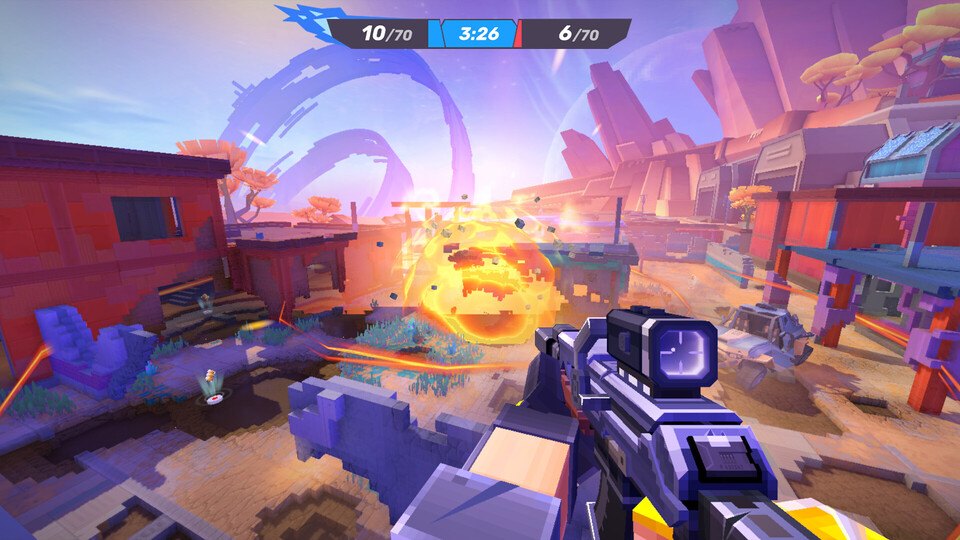
Pixel Gun 2 adds another layer of strategy to the arena-shooter formula through its Ability Card system. Weapons and gadgets still determine how you fight, but the right collection of cards can change how your character performs during a match: You can specialize in mobility, survivability, precision damage, gadget usage, or close-range pressure. Understanding which cards deserve a permanent spot in your deck is more important than simply collecting as many as possible.

How Ability Cards Work in Pixel Gun 2
Ability Cards are persistent perks that become active during a match as you level up through combat. Before entering a battle, you select eight cards for your deck. These cards are then used as your available pool during the match.
Your In-Match Level Determines Card Choices
You gain points through normal match activities, including eliminating opponents, assisting teammates, and completing objectives. As you earn enough points, your in-match level increases. Whenever you reach a new level, you are presented with two cards from your deck and choose one to activate.
The selected card immediately starts providing its bonus for the rest of the match. At level 5, all remaining inactive cards in your deck become active automatically. This means every card in your eight-card loadout can eventually contribute during a long enough match.

Why Your Deck Matters
The system adds a progression layer to every round. You are not simply choosing the strongest eight cards individually. You are deciding which combinations will work together as your character becomes stronger.
A player using an SMG might want movement and reload bonuses, while a sniper-oriented build can benefit much more from precision and defensive cards. A close-range player may instead prioritize health, lifesteal, and movement.

Ability Card Tier List – September 2026
The following ranking focuses on general PvP value, consistency, and how easily a card can contribute across different weapons and map situations.

| TIER | ABILITY CARD | CATEGORY | MAIN BENEFIT |
| S | Vampirism | Recovery | Helps restore health during aggressive fights |
| S | Precision Strike | Damage | Improves headshot damage |
| S | Fleet Foot | Mobility | Increases movement and sprint speed |
| S | Reinforced Armor | Defense | Raises survivability through additional HP and armor |
| A | Sleight of Hand | Utility | Improves weapon reload speed |
| A | Overclocked Gadget | Gadgets | Reduces gadget recovery time |
| A | Juggernaut Momentum | Melee / Mobility | Improves movement while using melee weapons |
| A | Heavy Impact | Destruction | Improves damage against destructible cover |
| B | Extended Mag | Capacity | Increases magazine size |
| B | Aegis Pulse | Defense | Provides additional protection after reaching low health |
| B | Quick Swap | Weapon Utility | Reduces weapon switching delay |
| C | Scavenger’s Mark | Resources | Improves ammunition availability from defeated enemies |
| C | Thermal Footsteps | Recon | Provides temporary information about enemy movement |
This ranking assumes a general PvP environment. Cards can move up or down depending on your weapon combination, map layout, and role within the team.
S-Tier Ability Cards
S-tier cards provide benefits that remain useful in a large number of situations.
Vampirism
Vampirism is one of the most valuable aggressive cards because it rewards players for staying involved in fights. Restoring health through successful attacks or eliminations allows you to remain on the offensive rather than constantly retreating to recover. It becomes especially effective for weapons that can secure repeated eliminations at close or medium range.

Vampirism is less impressive for players who spend most of the match avoiding direct engagements, but it can be a major difference-maker for run-and-gun builds.
Precision Strike
Precision Strike is designed for players who consistently land headshots. A stronger headshot multiplier directly improves the value of accurate aim, making the card very attractive for assault rifles, precision weapons, and sniper-style loadouts. It is less valuable if your weapon and playstyle are centered around splash damage or indiscriminate area attacks.
Fleet Foot
Fleet Foot improves movement and sprint speed, making it one of the most universally useful cards in the current pool. Faster movement helps you reach objectives, escape bad engagements, reposition between cover, and close distance against slower opponents. Its flexibility makes it useful on almost every map.
Reinforced Armor
Reinforced Armor provides a straightforward increase to survivability. It is especially useful for players who frequently find themselves in prolonged fights or who prefer to hold objectives rather than constantly rotate around the map. The card also pairs well with Vampirism because additional effective health gives you more time to secure the eliminations needed to recover.

A-Tier Ability Cards
A-tier cards are powerful but tend to become more dependent on your loadout.
Sleight of Hand
Reload speed is one of the simplest ways to increase practical damage output. A faster reload gives you more uptime and reduces the period in which an opponent can punish you for running dry. It is quite valuable for weapons with long reload animations or smaller magazines.
Overclocked Gadget
Overclocked Gadget is the ideal choice for gadget-focused players. Shorter recovery times let you use your utility more frequently, which can be incredibly valuable when your team’s strategy revolves around controlling chokepoints, flushing opponents out of cover, or securing objectives. Its value increases substantially on maps where gadgets can influence multiple lanes.
Juggernaut Momentum
Juggernaut Momentum is specialized for melee-heavy builds. The additional movement speed helps bridge the gap between you and ranged opponents while making it easier to stay attached to targets once you reach close range. It should be treated as a build card rather than a universal pick.
Heavy Impact
Heavy Impact is most effective on maps with abundant destructible terrain. Instead of simply dealing more damage to enemies, it helps you reshape the battlefield by breaking walls and other pieces of cover more efficiently. That makes it especially useful against players who repeatedly hide behind destructible structures.
Best Ability Decks for September 2026
The strongest deck depends on your weapon loadout. A good deck should have a clear identity instead of simply filling all eight slots with unrelated bonuses.
Lifesteal Headshot Build
- Best For: Assault rifles, SMGs, precision weapons
Core Cards
- Vampirism
- Precision Strike
- Fleet Foot
- Sleight of Hand
Flex Cards
- Reinforced Armor
- Extended Mag
- Overclocked Gadget
- Quick Swap
How to Play
This build rewards aggressive accuracy. Use Fleet Foot to control distance, then combine Precision Strike with a weapon capable of producing reliable headshots. Vampirism helps you stay in the fight after winning an engagement, while Sleight of Hand reduces the downtime between magazines. The result is a fast-moving build designed to win several consecutive encounters instead of relying on one isolated elimination.

Melee Juggernaut Build
- Best For: Shotguns, melee weapons, close-range maps
Core Cards
- Reinforced Armor
- Juggernaut Momentum
- Vampirism
- Heavy Impact
Flex Cards
- Fleet Foot
- Aegis Pulse
- Overclocked Gadget
- Sleight of Hand
How to Play
The goal is to turn close-range combat into a sustained pressure game. Use Heavy Impact to break through destructible cover and remove defensive positions. Juggernaut Momentum helps you close the gap, while Reinforced Armor gives you more room to survive the approach. Once you’re in range, Vampirism provides additional staying power after successful attacks.
Tactical Gadget Controller
- Best For: Objective players, support-focused teams, choke-point control
Core Cards
- Overclocked Gadget
- Reinforced Armor
- Fleet Foot
- Heavy Impact
Flex Cards
- Sleight of Hand
- Extended Mag
- Aegis Pulse
- Precision Strike
How to Play
This build is about controlling where the enemy can safely move. Use gadgets frequently to disrupt them, then rotate quickly between objectives with Fleet Foot. Reinforced Armor helps you hold contested areas, while Heavy Impact lets you destroy defensive cover and open new routes. This is especially effective on maps where controlling one or two key chokepoints can decide the result.
Balanced All-Rounder Deck
Not every player wants a specialized build. A balanced deck can cover most situations without becoming heavily dependent on one weapon type.
Recommended Cards
- Vampirism
- Fleet Foot
- Reinforced Armor
- Precision Strike
- Sleight of Hand
- Extended Mag
- Overclocked Gadget
- Quick Swap
This deck gives you damage, survivability, mobility, reload speed, and gadget utility. It is a strong starting point when you are still experimenting with the game’s weapons and figuring out which playstyle suits you.
Building Your First Deck
New players should resist the temptation to create an extremely specialized deck immediately. Start with a balanced setup containing:
- One mobility card: Fleet Foot
- One defensive card: Reinforced Armor
- One damage card: Precision Strike
- One recovery option: Vampirism
Then use the remaining four slots to support your primary weapon and preferred combat range. Once you understand which parts of your loadout are causing problems, replace the less useful cards with more specialized choices.

The current Pixel Gun 2 Ability Card meta is build around creating a synergy rather than simply collecting the highest-rarity cards. The best deck depends on your weapon and the role you play for your team. A sniper does not need the same eight cards as a shotgun rusher, and an objective controller may gain more from survivability and gadgets than another pure damage bonus.
Build your eight-card deck around a clear purpose, adapt your choices to the match, and upgrade the cards you use most often. As your collection grows, maintaining several specialized decks will give you much more flexibility than trying to force one setup into every battlefield.