
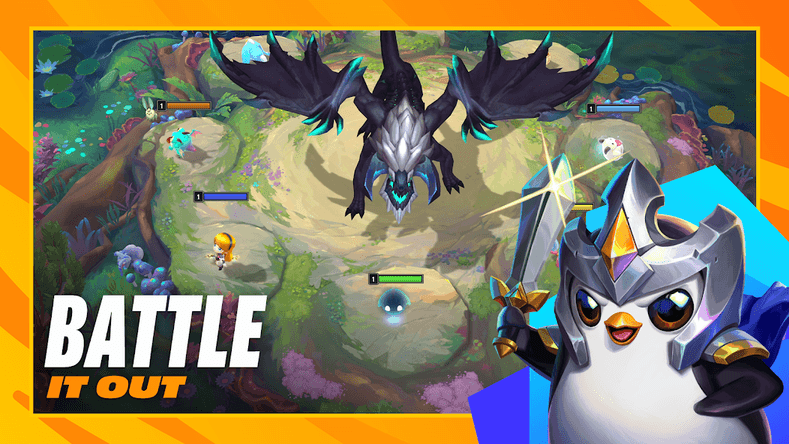
Teamfight Tactics Mobile delivers the same strategic auto-battler experience as the PC version, but playing on a touchscreen makes quick decisions and efficient scouting especially important. Winning consistently depends on more than finding powerful units: you also need a functional team composition, smart item placement, a healthy economy, and the ability to adapt your board to different opponents. This guide covers the core skills every TFT Mobile player should know.
Building a Strong TFT Team Composition
A successful TFT board needs more than expensive champions. Even powerful units can struggle when they don’t benefit from active traits or have no clear frontline and backline structure.
Build a Frontline and Backline
Most compositions need two basic elements:
- Frontline units: Tanks and durable champions that absorb damage, control enemies, and give the rest of the team time to attack.
- Backline units: Damage dealers and supporting units that perform best when protected from direct pressure.
A board filled entirely with carries can collapse immediately when enemies reach them. On the other hand, a team with excellent tanks but insufficient damage may survive for a long time without actually winning the fight. The goal is to find a balance between durability and damage.
Prioritize Important Trait Breakpoints
Traits can dramatically increase the strength of a composition once you reach the required number of units. Depending on the current set, a trait may offer bonuses at thresholds such as 2, 4, or 6 units. Reaching one of these breakpoints is usually more valuable than randomly adding another high-cost champion with no synergy.
However, don’t force every trait you see. A team with several partially active synergies is often weaker than one built around a smaller number of meaningful bonuses.
Upgrade Units When It Makes Sense
Three copies of a 1-star champion combine into a 2-star version, while three 2-star copies can create a 3-star unit. Early in the game, upgrading an inexpensive champion can sometimes provide more immediate strength than replacing it with a higher-cost unit that remains at 1 star.
Don’t automatically sell upgraded units just because you find something more expensive. Compare the actual strength of your board rather than focusing only on unit cost.

TFT Item Basics
Items can completely change how effective a champion becomes. Every unit can hold up to three completed items, and combining two basic components creates a finished item. The best items depend on the current set, champion abilities, and your team composition, but the following categories provide a useful starting point:
| ROLE | COMPONENTS | ITEM CHOICES | BEST USED ON |
| AD Carry | B.F. Sword, Recurve Bow, Sparring Gloves | Infinity Edge, Giant Slayer, Last Whisper | Physical damage dealers |
| AP Carry | Needlessly Large Rod, Tear of the Goddess | Rabadon’s Deathcap, Spear of Shojin, Jeweled Gauntlet | Ability-focused carries |
| Main Tank | Giant’s Belt, Chain Vest, Negatron Cloak | Warmog’s Armor, Bramble Vest, Dragon’s Claw | Primary frontline units |
Don’t Spread Your Best Items Too Thin
One of the most common mistakes is placing random components across every unit on the board. In many situations, you’ll get better results by fully equipping your main damage dealer and your primary frontline tank.
A properly itemized carry can win fights much more effectively than three different champions each holding one incomplete item. The same principle applies to your frontline. A single well-equipped tank can survive long enough to create valuable time for your backline to deal damage.
How the TFT Gold Economy Works
Gold management is one of the biggest differences between players who consistently reach the late game and those who fall behind early. Every decision to reroll or level up comes at an economic cost, so learning when to save can be just as important as learning when to spend.
- Passive Gold: You receive gold as rounds progress, giving you a basic income that allows your economy to grow.
- Interest: Saving gold provides additional income. For every 10 gold you hold, you can earn additional interest, up to the usual maximum of 5 bonus gold at 50 gold. Once you reach this figure, you can often spend excess gold while maintaining maximum interest.
- Win and Loss Streaks: Consecutive wins or losses can also provide additional income. Winning streaks reward a strong board, while controlled loss streaks can help generate extra resources when you’re intentionally playing for a stronger later transition.

When Should You Level Up?
There are two broad approaches to spending your gold:
Standard Leveling Strategy
Reach around 50 gold and then use the additional income to level efficiently. This approach generally aims to reach higher levels where stronger and more expensive units become easier to find. Once you’ve reached an important level breakpoint, you can spend gold rolling for key champions that complete your final composition.
Reroll Strategy
Some compositions are built around low-cost units that become exceptionally strong at 3 stars. In these cases, players may stay at a lower level (often around Levels 5 or 6) and spend gold refreshing the shop repeatedly.
The important thing is to choose a direction based on your composition. Don’t spend the entire game trying to level quickly and then suddenly switch to an expensive reroll strategy without enough gold remaining.
TFT Mobile Positioning Basics
Your team can have excellent units and perfect items yet still lose because of poor positioning. Where you place each champion determines who absorbs the first attacks, which enemies target your carries, and how effectively your abilities reach the opposing team.
Place Your Durable Units in Front
Your strongest tanks usually belong near the front of the board. Their job is to take the initial pressure and delay the enemy long enough for your damage dealers to start working. Not every tank must stand in exactly the same row. Moving a frontline unit slightly can sometimes affect enemy targeting or improve the effectiveness of its ability.
Keep Your Carries Safe
Fragile damage dealers generally belong in the backline or another protected position. However, placing every carry in the same corner can create an easy target for enemy abilities or backline access units. Positioning should change depending on the opponents you are likely to face.

How to Scout on TFT Mobile
Scouting is particularly important in the later stages of a match. Checking enemy boards lets you identify dangerous positioning, potential counters, and opponents who could eliminate your main carry before it has a chance to contribute. On mobile, use the player roster to move quickly between opponents rather than spending too much time manually navigating. Look for the following:
- Assassins or other backline threats.
- Strong area-of-effect abilities.
- Crowd-control-heavy units.
- Hooking or displacement mechanics.
- Where the enemy has placed its main carry.
Try to finish your scouting before combat begins so you have enough time to adjust your own board.
Protecting Your Backline from Assassins
Backline-diving units can create serious problems for fragile carries. Leaving your strongest damage dealer completely isolated in the corner can make it easy for enemies to reach them. A safer approach is to place durable secondary units nearby.
Use a Protective Box
Instead of placing your carry alone in the corner, surround or partially protect it with tougher champions. A simplified setup might look like this:
| POSITION | RECOMMENDED UNIT |
| Outer Backline | Durable secondary unit |
| Inner Backline | Main Carry |
| Nearby Hexes | Support or off-tank |
| Frontline | Main tanks |
The exact layout depends on the current set and enemy abilities, but the general idea is to make it harder for backline threats to immediately reach your most important unit.

Swap Sides When Necessary
If several opponents consistently threaten one side of your board, moving your carry to the opposite flank can be an effective adjustment. You can also leave a more durable champion in the original position to attract enemy pressure. Don’t become predictable. If your carry remains in the same corner every round, experienced opponents can easily position against you.
Avoiding AoE and Crowd Control
Tightly grouping your entire team can be dangerous against opponents with powerful area-of-effect attacks. One well-placed ability may stun, damage, or otherwise disable several important units simultaneously.
Spread Important Units Apart
Try to avoid placing all of your damage dealers on adjacent hexes. Leaving space between major carries can reduce the chances of a single ability shutting down your entire backline. You don’t necessarily need to spread every champion across the whole board. The goal is to avoid giving the opponent maximum value from one spell.
Position Against Enemy Threats
After scouting, consider where the enemy’s major AoE threats are located. Moving your most important carry to the opposite side of the board can sometimes keep it outside the most dangerous area. This is especially useful against abilities that target clusters or travel through predictable lines.
Use Secondary Units as Bait
A less important unit can sometimes be positioned to absorb an enemy’s opening ability. This tactic works best when you understand how the opposing champion chooses targets. Rather than exposing your primary carry to every dangerous spell, use your board positioning to encourage the enemy to waste important abilities elsewhere.

The Best Way to Improve at TFT Mobile
The best TFT Mobile players don’t win because they follow one composition every game. They understand how to react to the units, items, Augments, and opponents they encounter. Start by learning the basics: build a functional frontline, identify a reliable carry, activate meaningful traits, and protect your economy. Once those habits become natural, focus more on scouting and adjusting your positioning.
As you gain experience, you’ll become better at recognizing when to save, when to level, when to reroll, and when an opponent’s board requires an immediate change. TFT rewards flexibility: The more comfortably you can adapt your strategy from one game to the next, the more consistently you’ll win.