
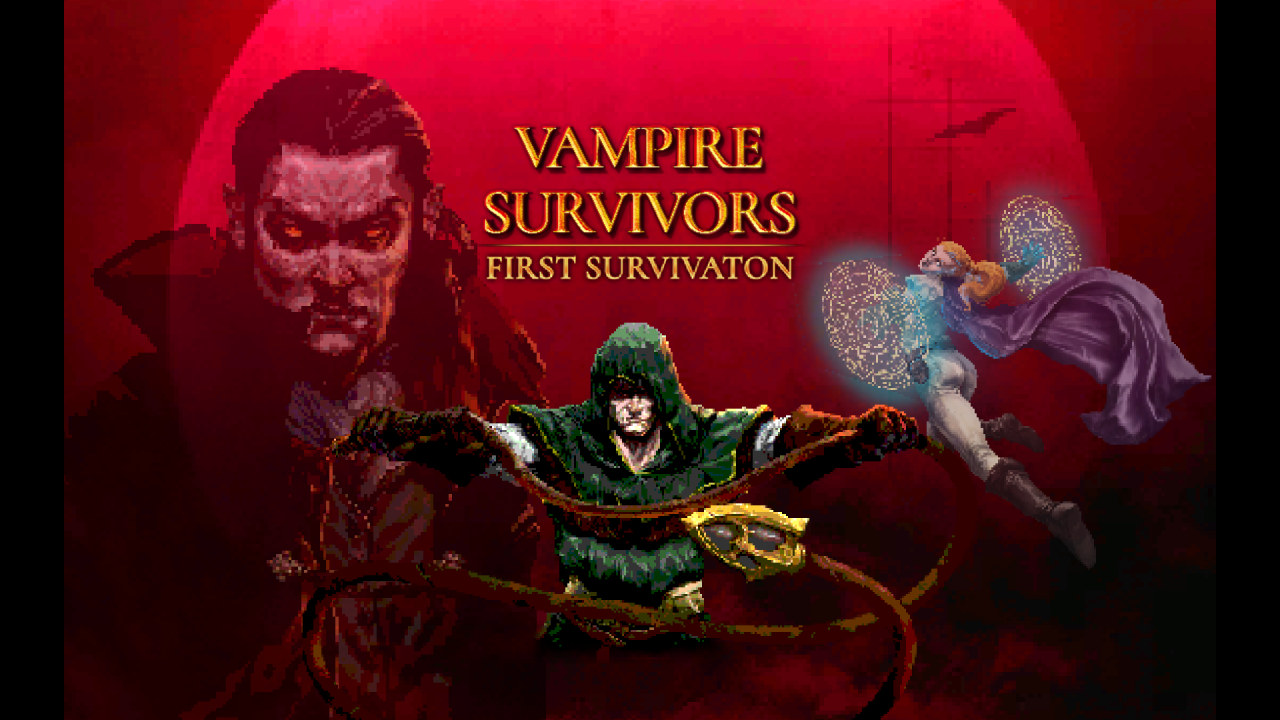
Vampire Survivors is one of those games that sounds almost too simple when you explain it. You choose a character, enter a stage, move around, and try not to die while increasingly ridiculous numbers of enemies close in from every direction. Your attacks happen automatically, so there are no combos to memorize, no carefully timed skill rotations, and very little standing between you and your next run.

And yet, that simplicity is exactly what makes it work.
What starts as a basic survival game quickly turns into a constant stream of small decisions. Every level gives you another chance to shape your build, every new character changes how you approach a run, and every failed attempt leaves you with another unlock or idea to try. Vampire Survivors doesn’t need complicated controls to keep you busy. It just gives you enough choices that starting one more run always feels reasonable.
Simple Controls, Surprisingly Smart Gameplay
The core of Vampire Survivors couldn’t be much easier to understand. You control your character’s movement while weapons attack automatically around you. Defeated enemies drop experience gems, and collecting enough of them levels you up.

Each level lets you choose between a small selection of weapons, upgrades, and passive items. Early on, the choices seem straightforward. Maybe you increase the damage of your current weapon or pick up something new that attacks enemies behind you. A few levels later, however, those decisions start piling up.

You have limited weapon and item slots, certain combinations can eventually evolve weapons into much stronger versions, and different upgrades work better with certain characters. Suddenly, you’re not just picking whatever has the biggest number attached to it. You’re thinking about what your build needs and what it could become ten minutes later.

All of this happens while increasingly large waves of enemies are trying to surround you.
Movement becomes its own skill. Sometimes you need to push through a weak section of a crowd before it closes. Other times, running directly toward experience gems is a terrible idea. The game doesn’t demand fast button inputs, but good positioning can make the difference between reaching the end of a stage and watching a promising build collapse.

Every Run Has Room to Become Something Different
The build system is easily one of Vampire Survivors’ biggest strengths.
Some runs turn into projectile-heavy setups that fill the entire screen with attacks. Others focus on weapons that orbit around your character, strike nearby enemies, create defensive zones, or cover large areas at regular intervals. Passive items can increase things like damage, movement speed, attack frequency, projectile size, or survivability, giving you even more ways to steer a build.

Sometimes everything comes together perfectly. Your weapons evolve, enemies stop feeling threatening, and the screen becomes such a mess of effects, numbers, enemies, and experience gems that it can be difficult to tell what is happening anymore.
Other times, your choices simply don’t work out.
That’s part of the appeal. A bad build isn’t necessarily wasted time because you’re still learning how different weapons interact. Maybe a weapon you ignored suddenly becomes the centerpiece of your next setup. Maybe a character you struggled with makes far more sense once you’ve unlocked a few more upgrades.

The randomness keeps you from following the exact same sequence every time, while the number of available combinations gives you plenty of control over what you’re trying to create.
Characters Give You Plenty of Reasons to Start Again
Vampire Survivors also understands that, like any other roguelite game, it needs a good reason to keep resetting the player.
Its growing roster of playable characters helps provide exactly that. Different survivors begin with different weapons and bonuses, which can significantly change the first few minutes of a run and influence the build you pursue afterward.

You gradually unlock more characters, stages, weapons, upgrades, and other features as you complete objectives. Gold earned during runs can also be spent on permanent improvements, giving your future attempts an advantage.
That means progression happens both inside and outside each run. You’re building a powerful character during the current attempt while also making progress toward things that will give you more options later.
It creates a very effective cycle. You finish a run, notice that you’ve unlocked something new, and immediately want to see what it does. That new unlock leads to another objective, which leads to another character, which gives you another build idea.
Before long, “one more run” has turned into several.
Vampire Survivors Feels Right at Home on Mobile
Although Vampire Survivors is available across several platforms, the mobile version is an especially natural fit for the game.
Most importantly, the control scheme translates well to a touchscreen. Since your character attacks automatically, you aren’t trying to recreate several buttons, triggers, and analog sticks on a small display. You mostly need to control movement and make selections when leveling up.
That makes it easy to pick up and play without feeling like you’re using a compromised version of the controls.

The smaller screen can get extremely busy during later parts of a run, though. Vampire Survivors already becomes visually chaotic when hundreds of enemies and attack effects are active simultaneously, and playing on a phone makes that chaos even more noticeable.
Still, the simplicity of the controls makes mobile one of the easiest ways to play. It’s the kind of game that works well for a short attempt, even if those short attempts have a habit of becoming much longer sessions.
Repetition Is Part of the Package
Vampire Survivors isn’t going to work for everyone.
At its core, you’re repeatedly entering stages, defeating huge numbers of enemies, gathering experience, and assembling builds. Once you’ve spent enough time with the game, the opening minutes of some runs can start feeling familiar.
Players who need constant changes in moment-to-moment gameplay may eventually find the structure repetitive.

The difference is that Vampire Survivors keeps giving that repetition new variables. New characters encourage different strategies. New weapons create additional combinations. Unlocks give you objectives beyond simply surviving, and experimenting with builds means two attempts don’t have to play out exactly the same way.
The basic loop rarely changes. What changes is everything you can do within it.
Verdict: A Must Play If You’re Into Roguelites and Have Time to Kill
Vampire Survivors is remarkably good at getting a lot out of very little. Moving a character around while attacks trigger automatically shouldn’t be enough to support dozens of hours of play, but the progression systems surrounding that simple idea make it difficult to stop.
The satisfaction comes from watching a weak character gradually become absurdly powerful, finding weapon combinations that completely change a run, and constantly unlocking something that gives you a reason to start again.
It can be repetitive, and the late-game visual chaos isn’t going to appeal to everyone. But if experimenting with builds, unlocking new possibilities, and turning an initially fragile character into a walking screen-clearing disaster sounds appealing, Vampire Survivors makes that loop work extremely well.
And whether you’re playing on PC, console, or mobile, starting the next run is usually the easiest decision in the game.
Did you find this review interesting? Read our other reviews to find more awesome games you might want to try!